
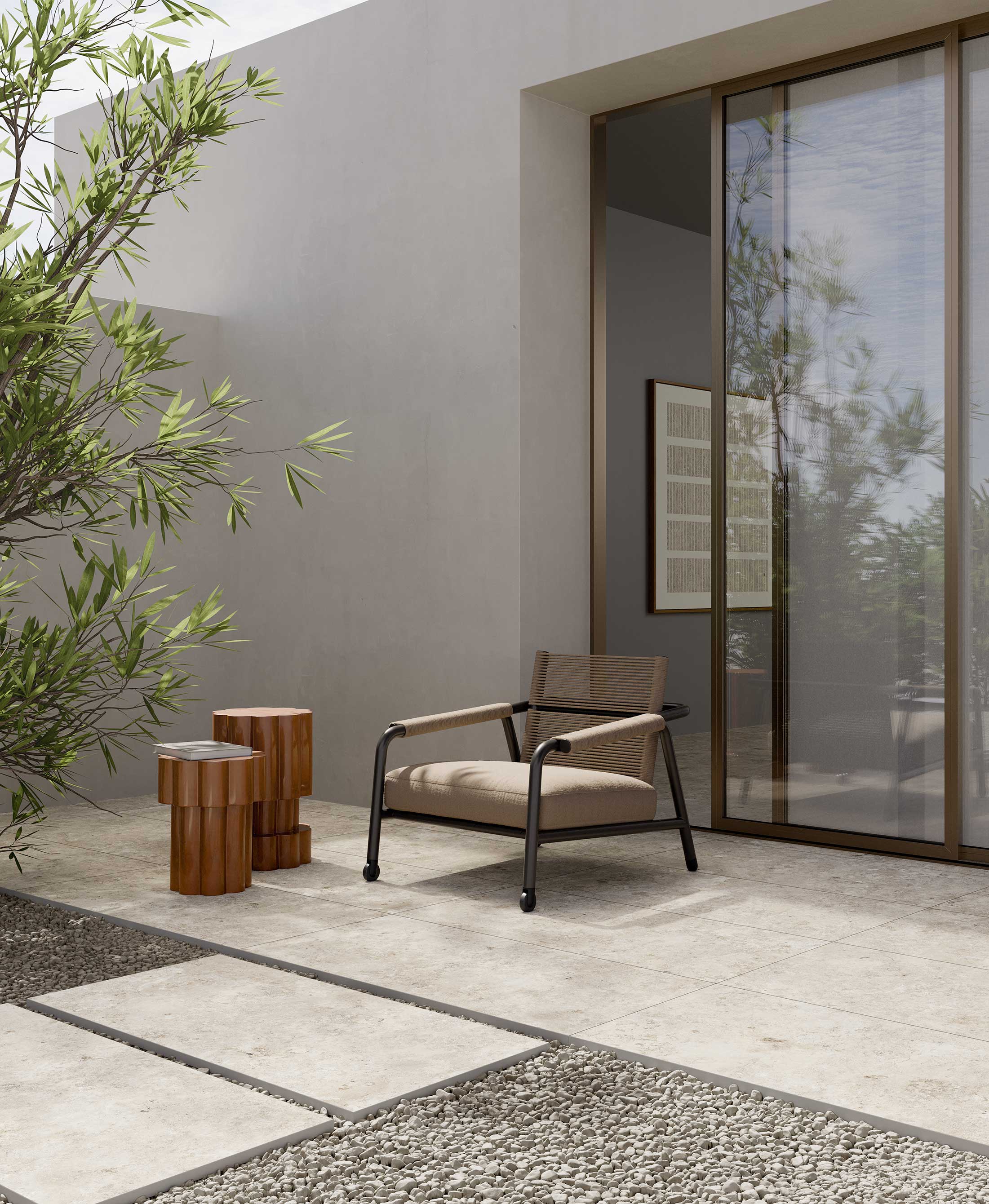
Green, stone, living surfaces
Biophilic outdoor tiles
Biophilic outdoor floors are about disappearing into landscape. Spec a warm travertine-look or limestone-look porcelain paver in 20mm, laid in a generous pattern with planted joints where possible. Surround with native or Mediterranean planting — olive, lavender, rosemary, native grasses — and timber pergola joinery. The pavers should look like they've been there for decades, weathered and embedded in the garden. Avoid hard-edged contemporary materials that fight the soft natural palette.
12 hand-picked tilesFrom $47/m²Samples from $15
Biophilic · Outdoor
12 tiles for this look
Priced per m² inc. GST · Order $15 samples before you commit

porcelain
Jerusalem Stone Beige R11 Safe
$130.00/m²
400 × 600 × 8mm · matteIn stock

porcelain
Coem English Stone Greige
$95.00/m²
604 × 900 × 9mm · texturedIn stock

porcelain
King Valley Beige Stone 02 External
$78.95/m²
600 × 600 × 20mm · texturedIn stock

Sale
porcelain
Ceppo Verde Green External P4
$69.95/m²
1200 × 600 · texturedIn stock

porcelain
Travertine Look Light External
$54.95/m²
600 × 600 × 20mm · texturedIn stock

Sale
natural-stone
Nepean Sandstone External Coping X20
$53.95/m²
300 × 1200 · texturedIn stock

Sale
natural-stone
Travertine Beige External Coping X20
$53.95/m²
300 × 1200 · texturedIn stock

Sale
natural-stone
Travertine Ivory External Coping X20
$53.95/m²
300 × 1200 · texturedIn stock

Sale
natural-stone
Travertine Beige External X20
$47.95/m²
600 × 600 · texturedIn stock
Sale
natural-stone
Travertine Beige External X20
$47.95/m²
600 × 600 · texturedIn stock

Sale
natural-stone
Travertine Ivory External X20
$47.95/m²
600 × 600 · texturedIn stock

Sale
natural-stone
Crown Travertine Beige Paver P5 X20
$46.95/m²
600 × 400 · matteIn stock
Biophilic outdoor — questions
Travertine pavers with planted joints — how does that work?
Lay 20mm porcelain pavers on a screed bed with wider joints (10–20mm) and fill with creeping thyme, dichondra, or moss instead of grout. Looks like an old Mediterranean courtyard, drains naturally, and softens the hard-paver geometry. Needs a horticulturally savvy install.
Best planting around biophilic pavers?
Olive trees, lavender, rosemary, native grasses, and ground-covers like creeping thyme or dichondra — drought-tolerant, year-round green, and they tolerate hot AU sun reflecting off pavers. Avoid lawn right up to pavers; it fights for water and creates a hard edge.
Will travertine-look pavers fade in AU sun?
Porcelain pavers don't fade — the colour is fired through the body or under UV-stable glaze, warranted for direct AU sun exposure. Real travertine pavers can slightly bleach over decades; porcelain stays consistent. The biophilic effect comes from planting, not paver patina.
Related looks
Explore more combinations
- Biophilic bathroom tilesBiophilic · Bathroom
- Biophilic ensuite tilesBiophilic · Ensuite
- Biophilic kitchen tilesBiophilic · Kitchen
- Biophilic living-room tilesBiophilic · Living room
- Coastal outdoor tilesCoastal · Outdoor
- Mediterranean outdoor tilesMediterranean · Outdoor
Or browse the full catalogue · upload a room photo.